
logo
  • Home
  • Events
    • The Gala
  • History
    • About Dean Storey
    • Articles
    • CAIL Awards
    • Past Chairs
    • Photo Wall
  • Media
    • Testimonials
  • Visiting Fellows
  • Donate
    • 75th Anniversary Campaign
  • Contact
Return to CAILAW.org
  • Home
  • Events
    • The Gala
  • History
    • About Dean Storey
    • Articles
    • CAIL Awards
    • Past Chairs
    • Photo Wall
  • Media
    • Testimonials
  • Visiting Fellows
  • Donate
    • 75th Anniversary Campaign
  • Contact

Robert “Bob” G. Storey

Founder, The Center for American and International Law

About Robert G. Storey (1893-1981)

Robert “Bob” G. Storey was the prominent Texas lawyer who founded The Center for American and International Law.

Storey’s illustrious legal career included being elected the president of the Dallas Bar Association, the State Bar of Texas, and later the American Bar Association.

Storey was a strong advocate for the advancement of legal education and dedicated much of his career to advancing the legal industry.

His dedication to promoting the rule of law domestically and abroad and his firm belief that world peace could be accomplished through law has left an enduring legacy we are proud to uphold today at The Center for American and International Law.
Law School

Storey began his law career at the University of Texas in Austin, which he had initially attended to follow his father’s footsteps to become a physician. He switched his career track to law shortly after enrolling at the university.

Military Service

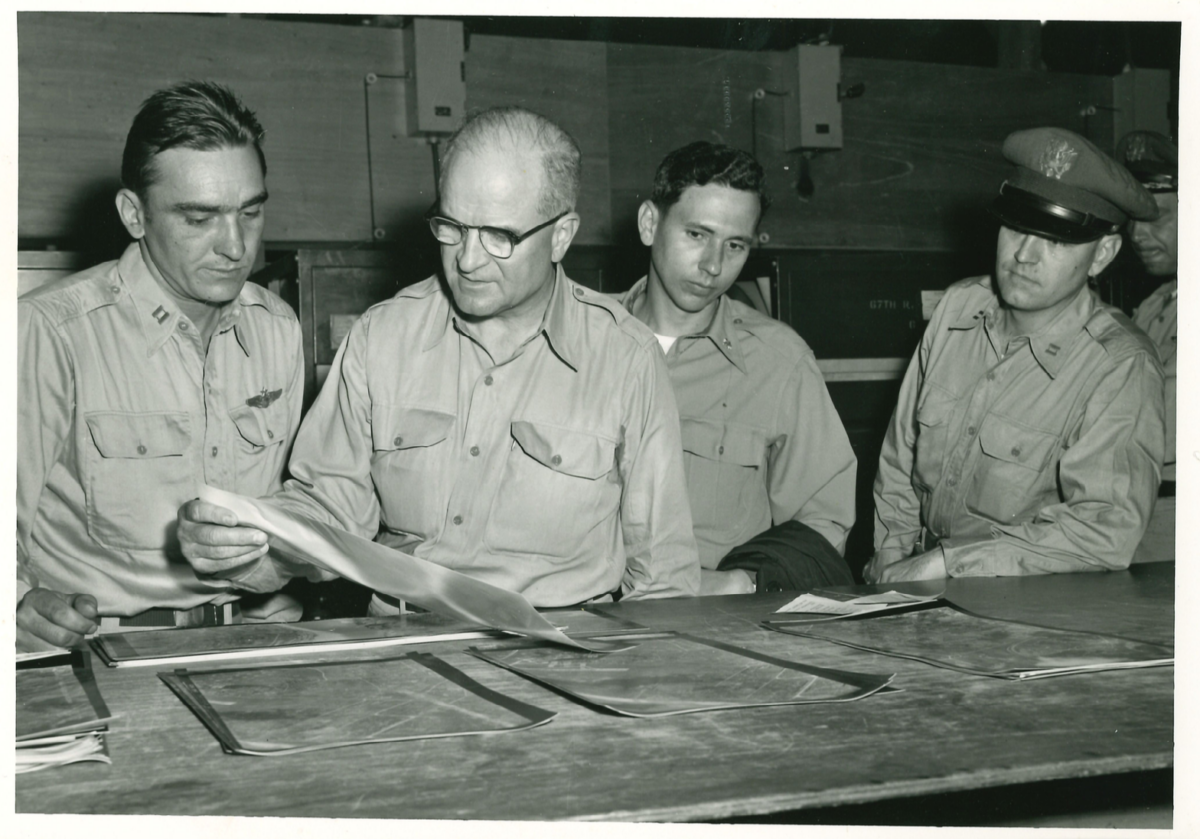
Storey served in both World Wars. During WW1, he served as a first lieutenant in the Coast Artillery. After the U.S. entered WW2, he served as a major in the U.S. Army Air Corps before later serving as a senior U.S. intelligence officer at the Fifteenth Air Force headquarters at Caserta, Italy. Storey was awarded the Bronze Star for collecting data and material on German war criminals in that region. After WWII, Storey returned to the U.S. as an Army colonel, assigned to the Senior Officers Air Intelligence School at Orlando, Florida.

Robert Storey, second from left, served in both World Wars.
"One of the greatest lessons from the Hitler era is the necessity for nations to provide an alternative to war. My own experience confirms that settlement of disputes between nations must be through appropriate judicial or arbitral means in lieu of war. […] War as a solution for settlement of disputes must end, otherwise civilization itself may be destroyed. Surely no greater challenge faces mankind." — Robert G. Storey
Book: The Final Judgement: Pearl Harbor to Nuremberg; 
Author: Robert G. Storey; Published by: The Naylor Company, Copyright 1968
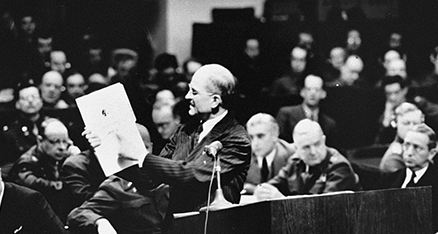
Robert Storey presents evidence during the International Military Tribunal at the Nuremburg Trials.

Nuremberg Trials

The Nuremberg Trials were a series of 13 trials in Nuremberg, Germany to bring Nazi war criminals to justice following WWII between 1945 and 1949.

Storey served as executive trial counsel for Supreme Court Justice Robert H. Jackson. His work and other Allied legal teams prosecuting high-ranking Nazi leaders helped set a precedent for modern international and human rights law.

For his contributions to humanitarian and international law development during the Nuremberg trials, Storey was awarded the U.S. Medal of Freedom and French Legion of Honor.

The Legal Center Movement

As a big proponent of what came to be known as the “legal center movement,” Storey envisioned training centers that would not only offer the best quality education for people pursuing legal careers but also provide practicing lawyers a place where they could continue to build on their education and refresh their knowledge of the law.

Storey founded the Southwestern Legal Foundation (now The Center for American and International Law) in 1947. At the time, it was the first legal center of its kind in the United States.

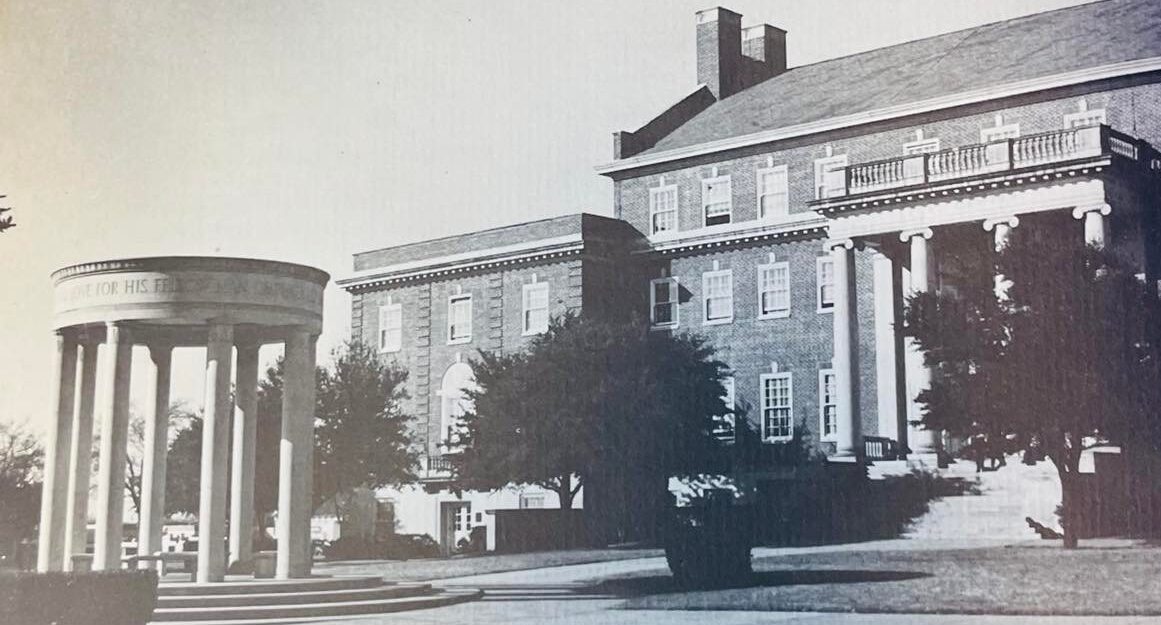
The Southwestern Legal Foundation at Southern Methodist University

Special Appointments

Leadership 

Throughout his career, Storey was the Dean of Southern Methodist University’s Law School and was elected to serve as the President of the Dallas, the Texas, the American, and the Inter-American Bar Associations.

Commissions  

Storey was appointed to several commissions, including the New Hoover Commission, the Commission on Human Rights, the Atlantic Pacific Inter-Oceanic Canal Study Commission, and vice chairman for the first Civil Rights Commission.

Special Counsel 

Alongside Leon Jaworski, Storey was asked by Texas Attorney General to contribute as special counsel to the investigation of the Texas Supplemental Report on the Assassination of President John F. Kennedy.

International Relations 

He promoted foreign scholarship by establishing the Korean Legal Center through his service as Chairman of the Board of Fulbright Scholarships and his intense interest in the World Peace Through Law movement.

Personal Life

Robert G. Storey Sr. was born in Greenville, Texas, on December 4, 1893, and lived in Dallas from 1923 until his death. In 1917, Storey married his first wife, Hazel Porter, with whom he had two sons, Robert G. Storey, Jr. and Charles Porter Storey. Both sons became lawyers who worked at the family’s firm, Storey, Armstrong & Steger in Dallas. After Porter’s death in 1962, he married Jewel Hope Osborn in 1965. Storey died in Dallas on January 16, 1981.


Celebrating 75 years of educating lawyers and law enforcement professionals around the world.

Quick LInks

  • Home
  • Events
  • Articles
  • History
  • Contact

Get In Touch

advancement@cailaw.org
+1.972.244.3400

Social

© 2022 The Center for American and International Law. All Rights Reserved.  Privacy Policy
Manage Cookie Consent
To provide the best experiences, we use technologies like cookies to store and/or access device information. Consenting to these technologies will allow us to process data such as browsing behavior or unique IDs on this site. Not consenting or withdrawing consent, may adversely affect certain features and functions.
Functional Always active
The technical storage or access is strictly necessary for the legitimate purpose of enabling the use of a specific service explicitly requested by the subscriber or user, or for the sole purpose of carrying out the transmission of a communication over an electronic communications network.
Preferences
The technical storage or access is necessary for the legitimate purpose of storing preferences that are not requested by the subscriber or user.
Statistics
The technical storage or access that is used exclusively for statistical purposes. The technical storage or access that is used exclusively for anonymous statistical purposes. Without a subpoena, voluntary compliance on the part of your Internet Service Provider, or additional records from a third party, information stored or retrieved for this purpose alone cannot usually be used to identify you.
Marketing
The technical storage or access is required to create user profiles to send advertising, or to track the user on a website or across several websites for similar marketing purposes.
  • Manage options
  • Manage services
  • Manage {vendor_count} vendors
  • Read more about these purposes
View preferences
  • {title}
  • {title}
  • {title}